
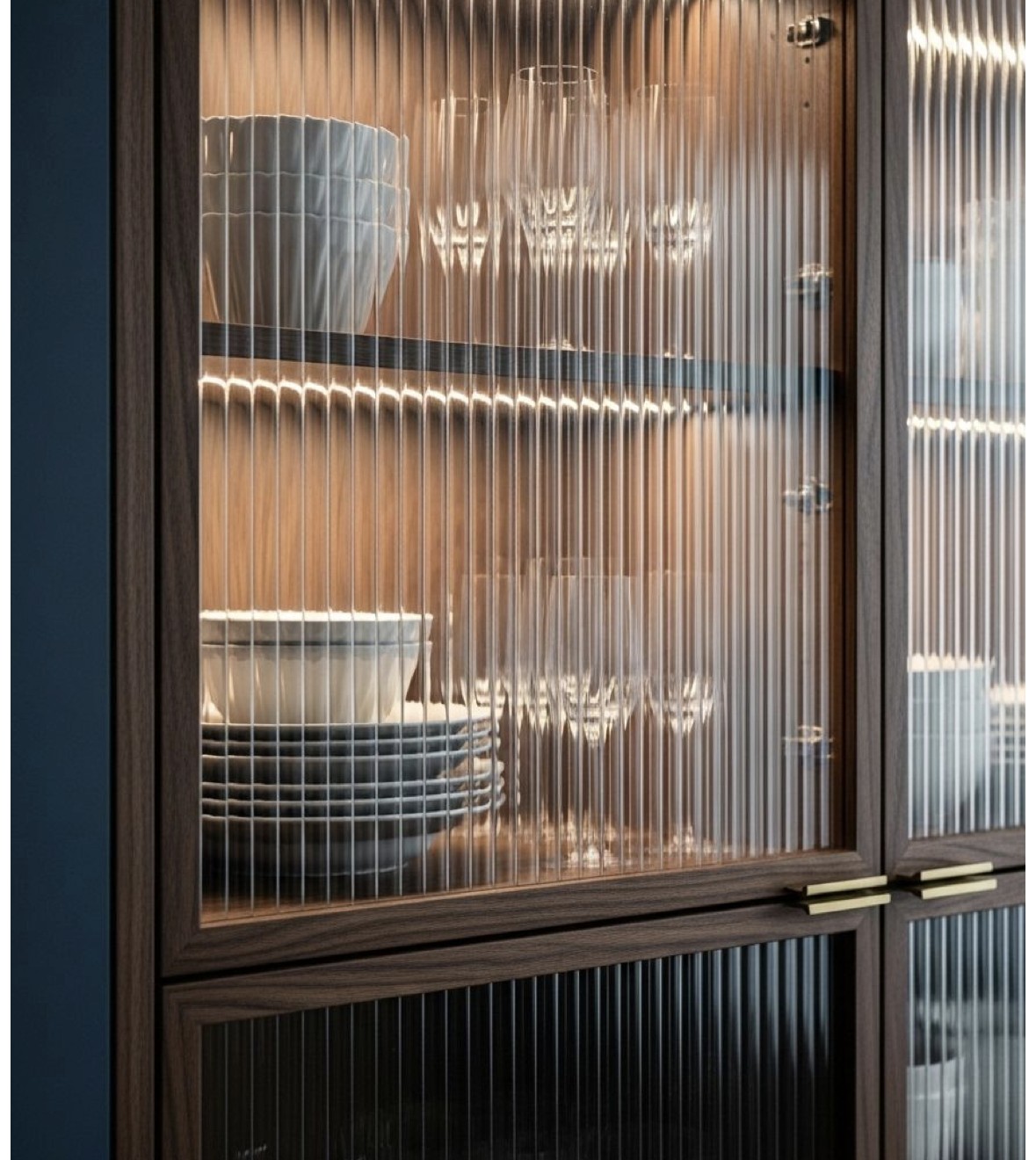
Belagio crockery cabinet
Finish: walnut veneer frames, fluted glass, brass bar handles, shelf lighting, veneered …
from $2 485
Learn more
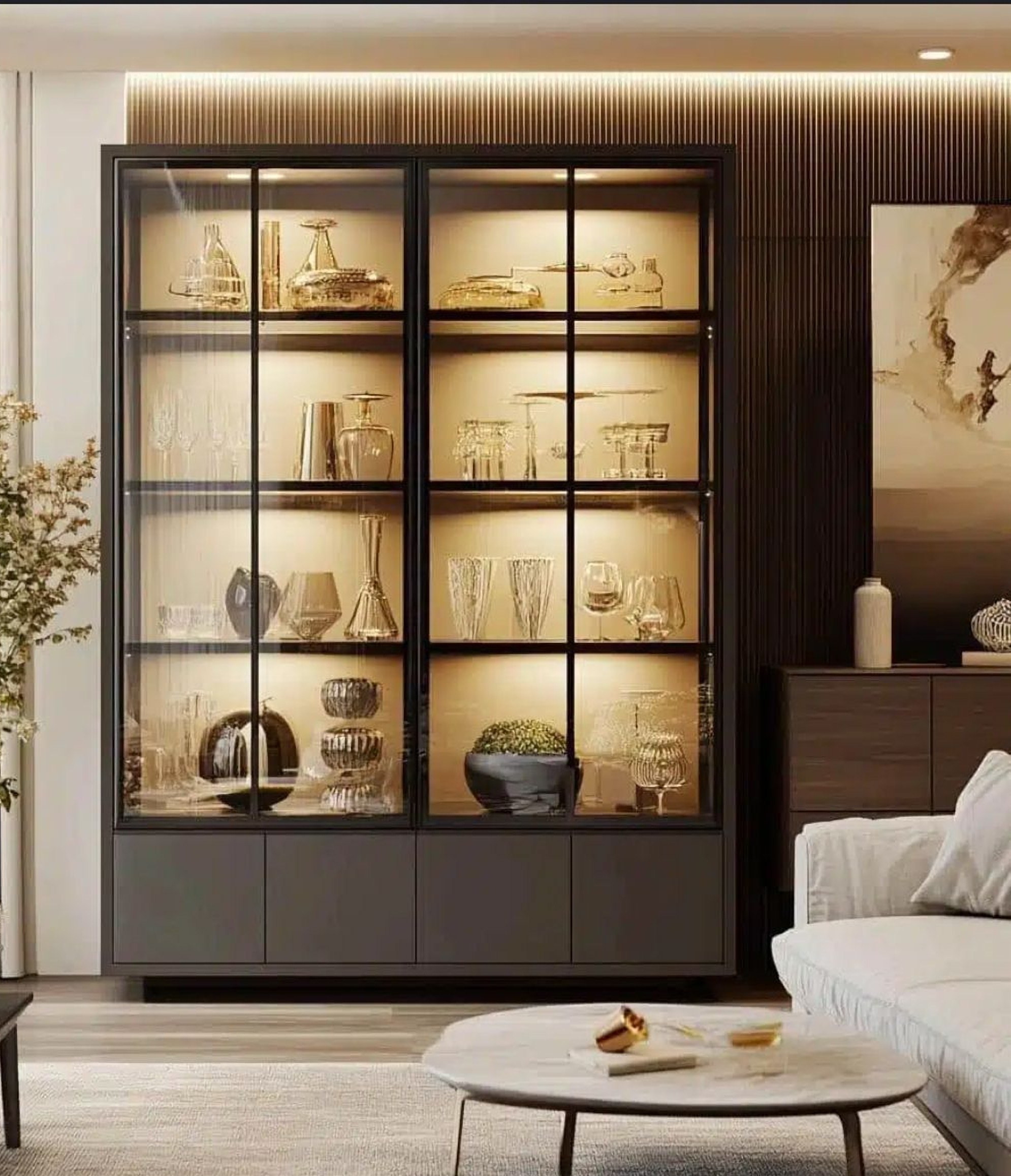
We design and manufacture made-to-order furniture to suit your dimensions, interior and fabric. 3D visualisation before production, honest pricing with no markups, and a 2-year furniture warranty.
A custom china cabinet is a buffet, dresser or display cabinet made for your kitchen, dining room or living room. The collection includes freestanding display cabinets with glass doors, open shelving with lighting and buffets integrated into the kitchen run. We tailor dimensions, fronts, shelves and lighting to your dinner service and your space.
Selected 2 items by filters. We can adapt any to your dimensions, fronts and interior layout.
Finish: walnut veneer frames, fluted glass, brass bar handles, shelf lighting, veneered …
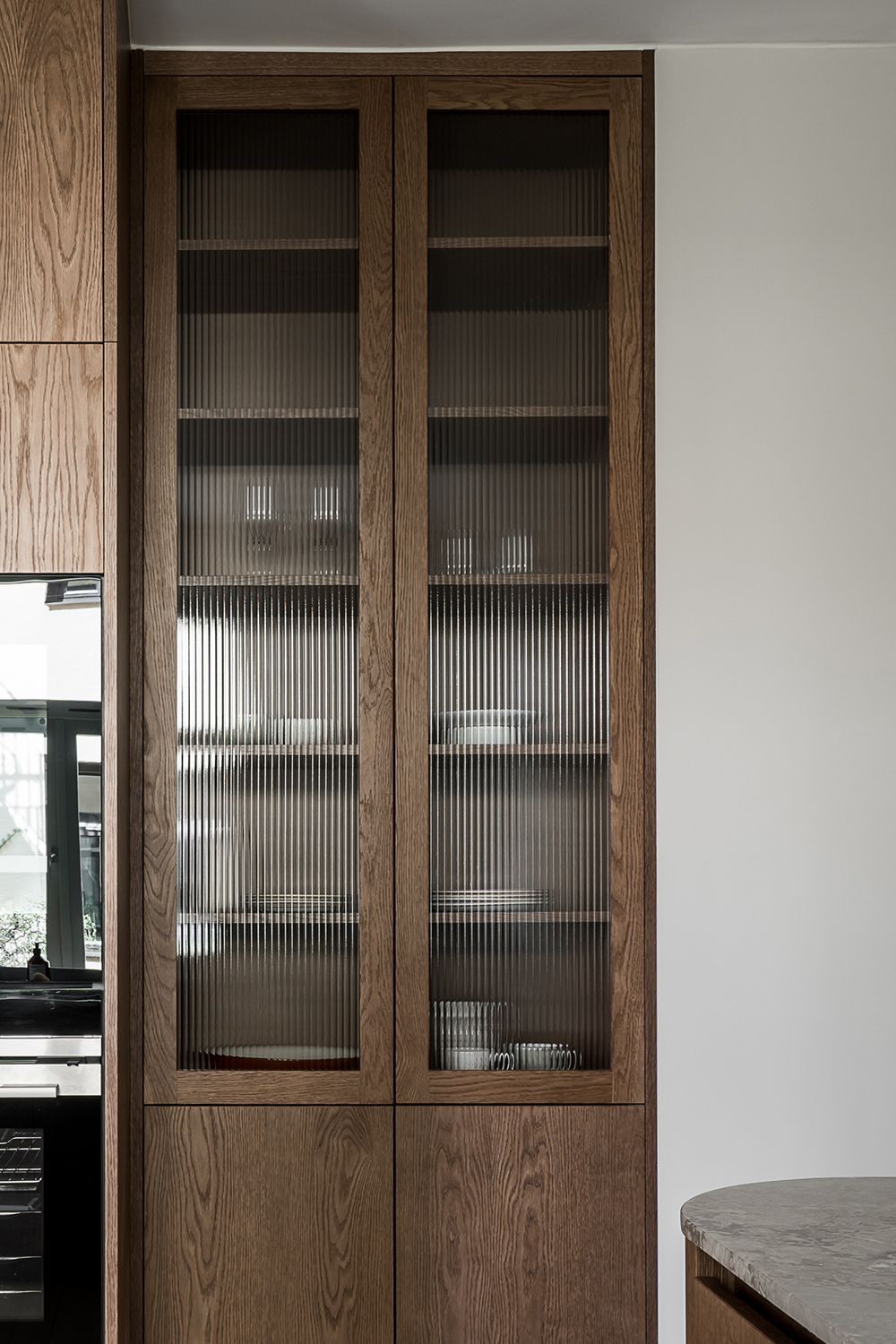
Finish: oak veneer, fluted glass in wooden frame, solid lower doors, integrates into kit…
Can't find an answer? Call us or send an enquiry — a designer will reply during business hours.
The display cabinet is almost fully glazed, so tableware is visible from every side. The sideboard has a glass upper section and a closed lower section with drawers, while the buffet has more solid fronts. The section includes all three options, and any of them can be made to your dimensions.
Start with what you will store: a formal dinner service, glasses or everyday tableware. A glazed display cabinet with lighting suits a collection; a sideboard with drawers for cutlery and tablecloths suits the dining area; a buffet within the kitchen run suits the kitchen. The designer will show the layout and front options in 3D.
Clear, fluted or tinted glass — in a wooden frame, an enamel front or a slim profile. Fluted glass conceals small items and leaves only the silhouette of the tableware visible. Doors can be rectangular or arched, with or without glazing bars.
The carcass is made from E1-class materials; fronts are MDF, enamel, oak or walnut veneer, glass and mirror. We select handles to match the style: brass pulls, knobs, bar handles or fronts with no handles at all.
Enamel in any shade — white, beige, cream, sage, green, grey-blue or black — as well as veneer and wood-effect decors. Contemporary solid-colour fronts and classic panelled fronts are equally possible.
Glass or wooden shelves, cutlery and linen drawers, stemware racks, wine racks, lighting for every shelf. We tailor the internal storage layout to your tableware rather than to a standard grid.
Yes, the buffet can be integrated into the kitchen run and a niche for the fridge can be provided alongside, as in the Trieste model. We match the fronts to the kitchen so the cabinet looks like part of it.
Most often it is a hinged-door cabinet, with the number of doors depending on the wall width. Wide display cabinets are assembled from several sections with a shared cornice and plinth.
The final cost depends on dimensions, glass, finish and internal layout; the team will prepare a quote after the designer consultation and project approval.
Production in our own factory takes from 3 weeks (with enamel or veneer fronts — about 2 months) after the design is approved. Payment is staged: 20% for documentation, 50% when production starts, 30% on completion.
The cabinet is levelled and the doors are hung.
Furniture warranty — 2 years; Blum hardware — 25 years. Hinges, soft-close mechanisms and handles are classed as hardware and are not included in the furniture warranty.
A transparent process with no surprises: you approve the design and price before we start production.
We discuss your requirements and arrange a designer consultation if needed.
We build a 3D model with precise dimensions — you see the result in advance.
We select upholstery, filling and hardware from 600+ samples.
Made in our own production in 1–2 months.
2-year warranty on furniture and 25 years on Blum hardware — all that’s left is to sit back.
Basket weave, chenille, velvet, microfibre, faux leather and genuine leather — the designer will send photos of samples via messenger.
Leave your contact details — a designer will contact you, clarify the brief and prepare a quote with a 3D visualisation.